
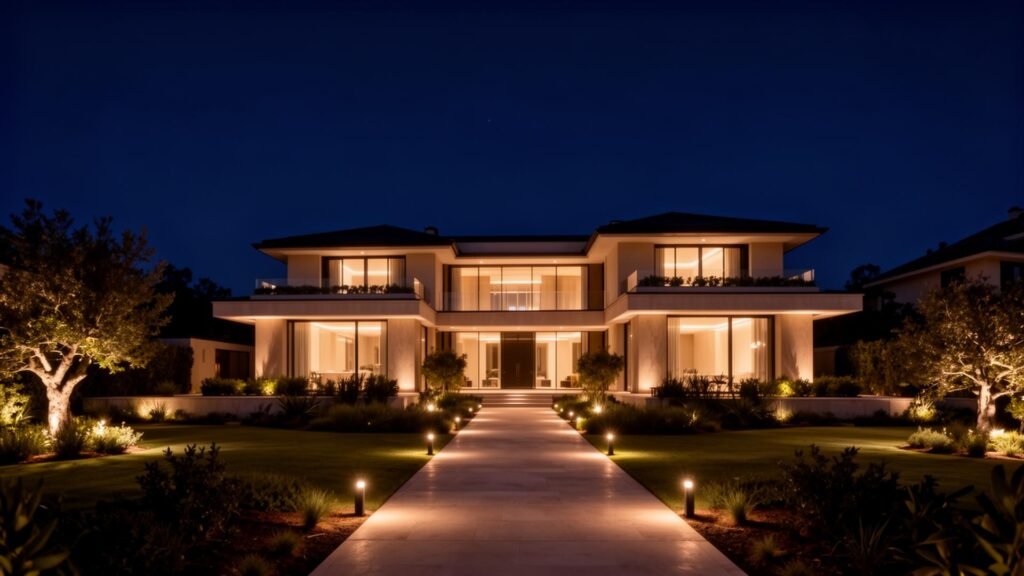
In most projects, lighting is treated as an electrical decision.
That’s the biggest mistake.
Lighting defines how a space feels. Automation only enhances it. If the lighting design is wrong, no technology can fix it.
You can have the best automation system, but if the lighting is harsh, uneven, or poorly placed, the space will never feel right.
Good lighting is layered. It combines ambient, task, and accent lighting to create depth and flexibility.
Automation then adds intelligence — dimming, scenes, scheduling, and mood control.
What proper lighting design includes:
- multiple lighting layers (not single-source lighting)
• dimming control for flexibility
• scene-based configurations
• daylight integration
• zoning based on usage
Instead of controlling 10 switches, you control experiences.
For example:
- “Evening Mode” for relaxed lighting
• “Work Mode” for focused brightness
• “Night Mode” for minimal pathway lighting
Lighting is not about visibility.
It’s about atmosphere.
Automation without lighting design is incomplete.
The right lighting design turns automation into a living experience.